|
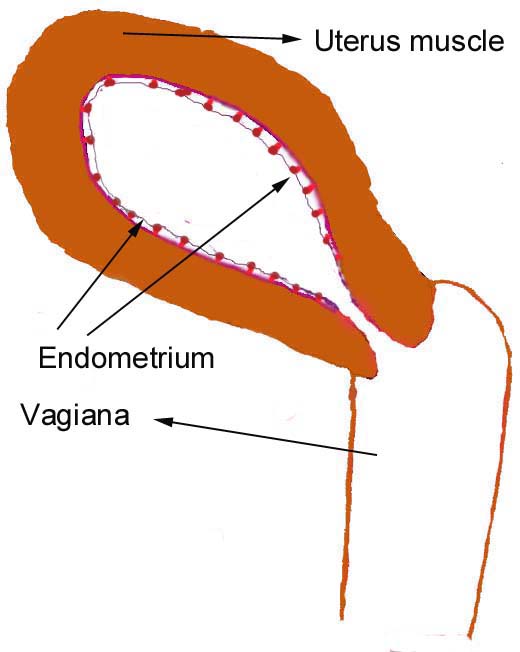
The following drawings illustrate the ovaries and endometrium in a young girl. The endometrium is thin . There is no sign of any developing follicles. The endomtrium before puberty. It is very thin.
The ovary before puberty.

During puberty follicles start developing in the ovary, the endometrium thickens but a corpus luteum and a proper premenstrual endometrium( secretory endometrium) are usually only present at the end of puberty ( just before full sexual maturity is achieved).
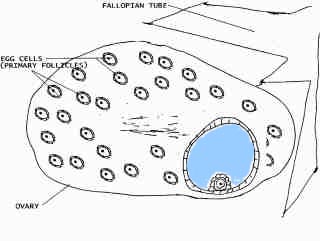
The next drawing show the presence of a follicle in the ovary. The real Graaffian follicle that bulges into the peritoneal cavity usually only develops towards the end of puberty. Follicles develop but regressed and stop functioning without releasing an egg cell. When these follicles cease to function , the estrogen levels drop and the endometrium is discarded. The first few cycles might therefor be irregular and heavy. The cycle should become regular within a few months.
The next drawing shows the endometrium during puberty. This is before menarche (the first menstruation)
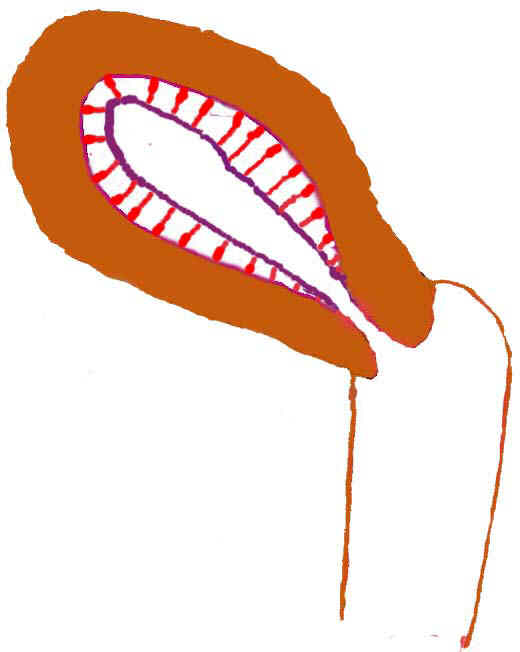
The endometrium is thicker but not as thick as the preovulation ovulation endomtrium endometrium. (Compare with the endomtrium during normal menstruation .
The next step is at the end of puberty when the cycle will be normal and the changes discussed at the normal menstruation and the normal ovary will occur in the uterus and the ovaries.
At what age should the female body be completely developed and a should a normal cycle be present? Full sexual maturity is usually achieved within 12 -24 moths after the first menstruation(menarche) and the first menstruation occurs between 11-13 years on average. This age differs in different parts of the world and in different populations groups and should only be used as a sough guide.
|