|
Updated April 16, 2007
This page will explain and illustrate how the egg cell is fertilized and how the early pregnancy attaches itself to the womb. A link between the new life(embryo) and its mother will be formed. Implantation is the establishment of this link between the mother and the embryo.
We will also discuss the phenomena known as implantation bleeding.
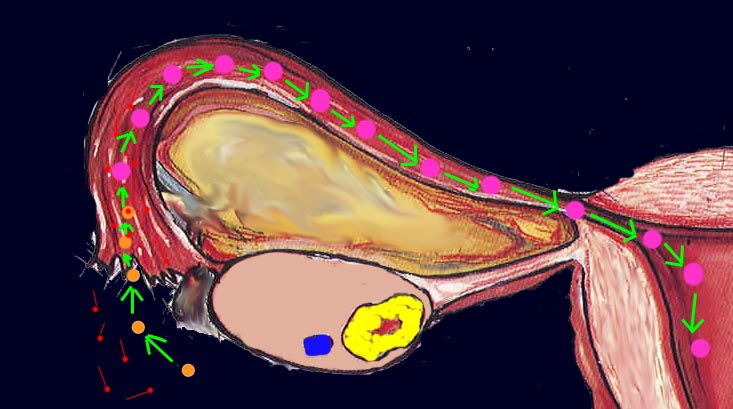
The egg cell is released by one of the ovaries and than sucked into a fallopian tube. The lining on the inside of the fallopian tube is also a highly specialized mucus membrane. The cells on the surface of this mucus membrane contain specialized hair like protrusions which is constantly moving in such a way that there is a constant movement of fluid from the ovary towards the opening of tubes and from there toward the cavity in the womb. This movement causes a suction effect. Anything in the vicinity of the ovaries ( like the egg cell) will be sucked into the womb. Refer to Normal Ovary.
An interesting fact is that fertilization does not occur in the womb , but at the opening of the tube near the ovary. That sperms swim all the way from the vagina, through the womb and upstream through the fallopian tubes.
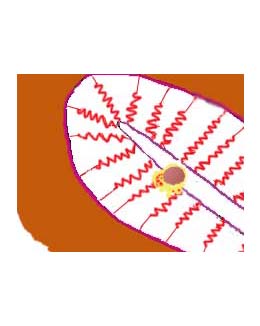
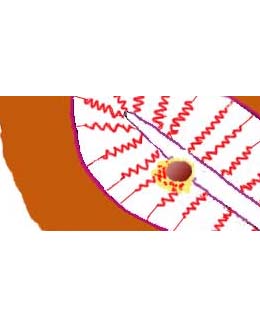
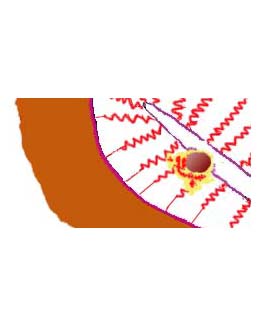
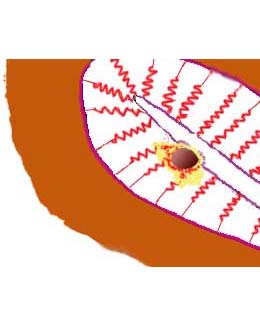
After fertilization the fertilized egg cell is slowly sucked through the fallopian tubes into the cavity of the womb. It only arrives in the womb about five days after conception. The egg than attaches itself to the endometrium ( the lining on the inside of the womb.).
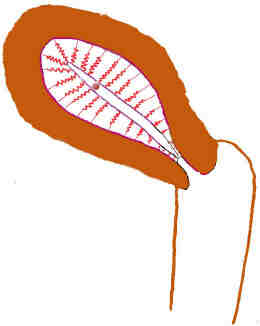
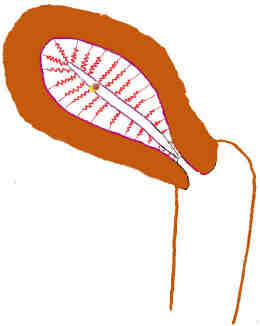
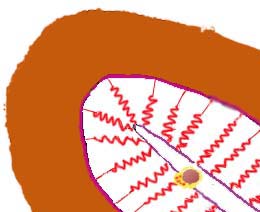
The drawings in the next section ( further down) will illustrate the whole process.
We will also discuss implantation bleeding. Implantation bleeding should not be confused with bleeding during pregnancy. We regard real implantation bleeding as a bleeding episode that occurs two weeks after conception ( four weeks after the previous menstruation), but more about it near the end of this page.
The discussion continues slightly further down the page.
|