|
We will now discuss possible side effects and complications due to oral contraception.
Irregular menstruations, spotting breakthrough bleedings.
When you are on "THE PILL" menstruation should occur every 28 days and it will normally start when are taking the placebo ("sugar tablets") Bleeding that occurs at any other time is refer to as breakthrough bleeding. It it a little it is referred to as spotting.
Skipping a tablet, having gastro enteritis ( vomiting and diaree)or certain medicines (certain antibiotics) can also cause breakthrough bleeding. Not enough hormones are absorbed to keep the endometrium intact. The endometrium is shed and a bleeding occurs at the wrong time.The antibiotics bind with the active ingredients of the pill forming substances that are not absorb into the body. Always check with your doctor before taking medicines while on the pill!
The pill hormones sometimes causes the lining to become so thin that the blood vessels are exposed and bleeding occur at the wrong time. These bleedings tend to be temporary and are very common during the first few months . It is if your body has to get use to "The pill". Depending on how heavy the bleeding and disturbing the bleeding is , it it possible to white a few months ( usually three) and in most cases the abnormal bleeding will disappear. The same type of breakthrough bleeding also occur when changing from one type of tablet to another type. If breakthrough bleedings persists ( longer than three months) or if it causing concern please consult a doctor. There are few ways to manage the bleeding , but in the hands of a properly trained person. Any breakthrough bleeding that start later( after the "pill" has been taken for a while without problems) should be medically investigated.
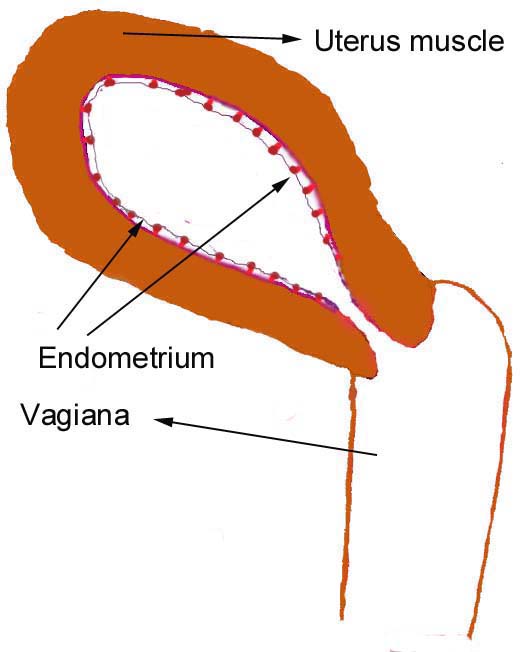
This drawing illustrates breakthrough bleedings.

The bleeding is usually scanty and called spotting.
Sometimes "the pill" causes the endometrium to become very thin, so thin that there is nothing to shed and the menstruations stop. If this occurs pregnancy should be excluded. The changes of a pregnancy are however very slight. There is usually another reason why the menstruation stopped. Usually due to the thin endometrium.
The pill is not fool proof and there is small change to conceive. The risk is about 1 in a thousand users per year. If a thousand women use "the pill" for one year, one of them might conceive. Some people might get mood swings, other might feel nausea while taking the pill. People with a history of liver diseases should consult a doctor before going on oral contraceptives. The same with persons who had blood clots previously.
Some people are concerned about a possible weight gain but many reseachers doubt if "the pill" has major effect on body weight.
There was also some concern about a slight increased risk for developing breast cancer in the past, but never proofed. "The pill " is in use for many years and no increased breast cancer risk was discovered until now.
Smokers should not take the pill after age 35 due to an increase risk of blood clots and strokes.
However, "the pill " is with us for many years , millions of women took and are still taking it. For the majority of them it was and is a save and reliable method of contraception. It is by far the most popular method of contraception.
|