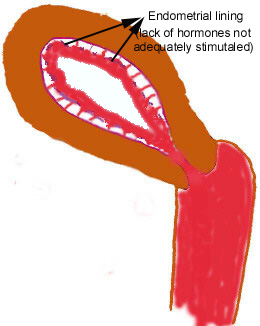
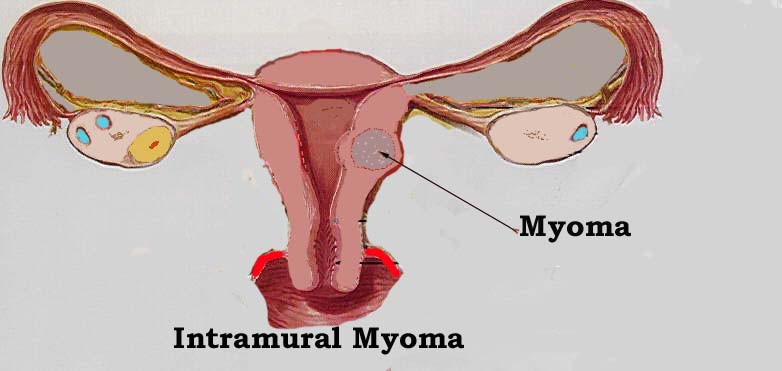
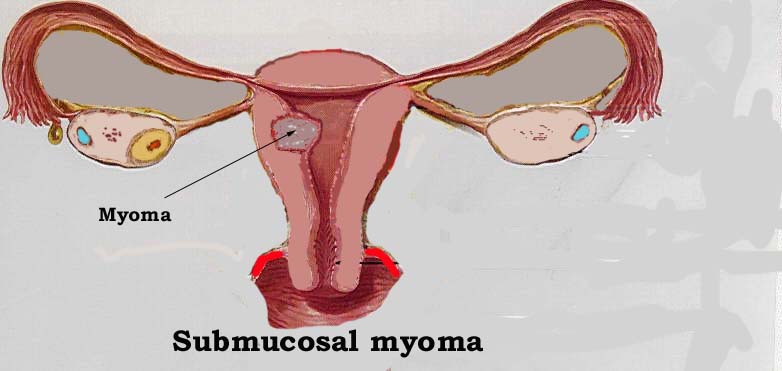
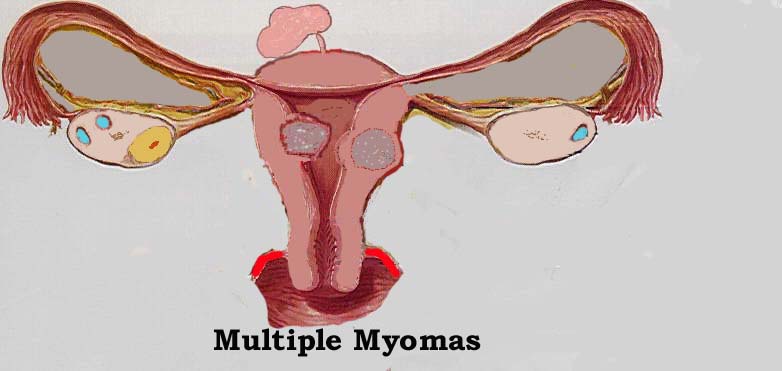
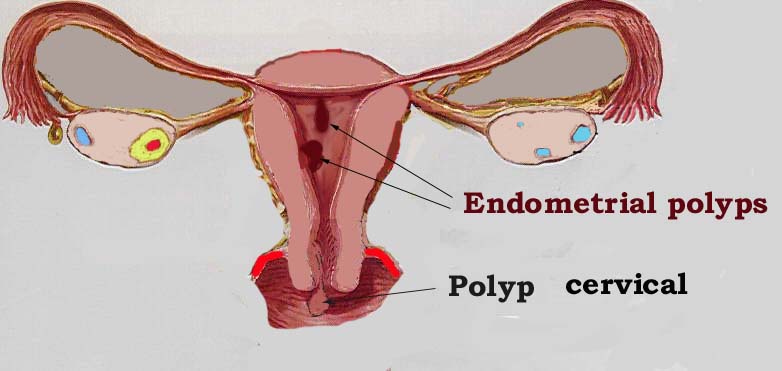
The discussion will be followed by a graphic illustration of the different conditions causing menstrual abnormalities. In a healthy normal woman menstruation occurs at regular intervals and it can cause anxiety if this changes.
Possible disturbing changes are :
- It stays away
- It is much less than normal and /or the interval between between bleedings increases.
- It is much more than normal and /or the interval between bleedings decreases.
- It becomes irregular , the interval between bleedings differs or changes and / or the duration of the actual bleeding differs or changes. It becomes impossible to predict when a period is going to start.
Scientifically the length of a cycle is calculated from the the starting day ( the day the bleeding begins) until the next starting day ( the day the next bleeding begins).The length of a cycle varies between 24 to 34 days with an average of 28 days. The duration of the actual bleeding is usually between 3- 7 days. ( these figures will slightly differ among different authors and is just an approximation). It is difficult to give a clear cut answer or to define abnormal menstruation accurately. If a person is worried about her bleeding , than it should be investigated.
The monthly changes that occur in the womb and ovaries are discussed elsewhere. Click here for the changes in the womb and here for the changes in the ovary. The changes in ovary lead to the release of the female hormones estrogen and progesterone at different stages of the cycle. The ovary is under the control of the pituitary gland , which in turn is under the control of the brain via the part of the brain called the hypothalamus. Click here . A disturbance at any level of this complicated control system can lead to menstrual abnormalities.
If the problem occurs in the control systems it is usually referred to as a hormonal imbalance. The problem can also occur due to other hormonal diseases.
There are other hormones in our body that have no direct influence on our sexual appearance or behavior. Examples are insulin, thyroid hormone and cortical steroid hormones. Abnormalities in the organs forming these hormones can also cause abnormal menstruations.
It is important to remember that menstrual abnormalities do not always originate in the uterus (womb).
In all instances of menstrual abnormalities medical checkups and examinations are advisable. It will usually include a complete physical examination and blood tests. It could also include more invasive examinations like a hysteroscopy or a DD & C. (Refer to gynecological operations ).
The blood tests will help the doctor to determine the level of the error if it is due to a control system problem . In other words it will help to determine if the problem is in the womb or the ovary or the pituitary gland.
Samples of the endometrium obtained during surgery are send for examination. The condition of the endometrium indicates if there is a shortage of estrogen (a thin endometrium), excess of estrogen ( a very thick endometrium) or if there is progesterone present ( a vascular endometrium).
The examination of endometrial tissue is a very important and supply a lot of information in helping the doctor to make a proper diagnosis.
A graphic display of possible causes of menstrual abnormalities will now follow.
|